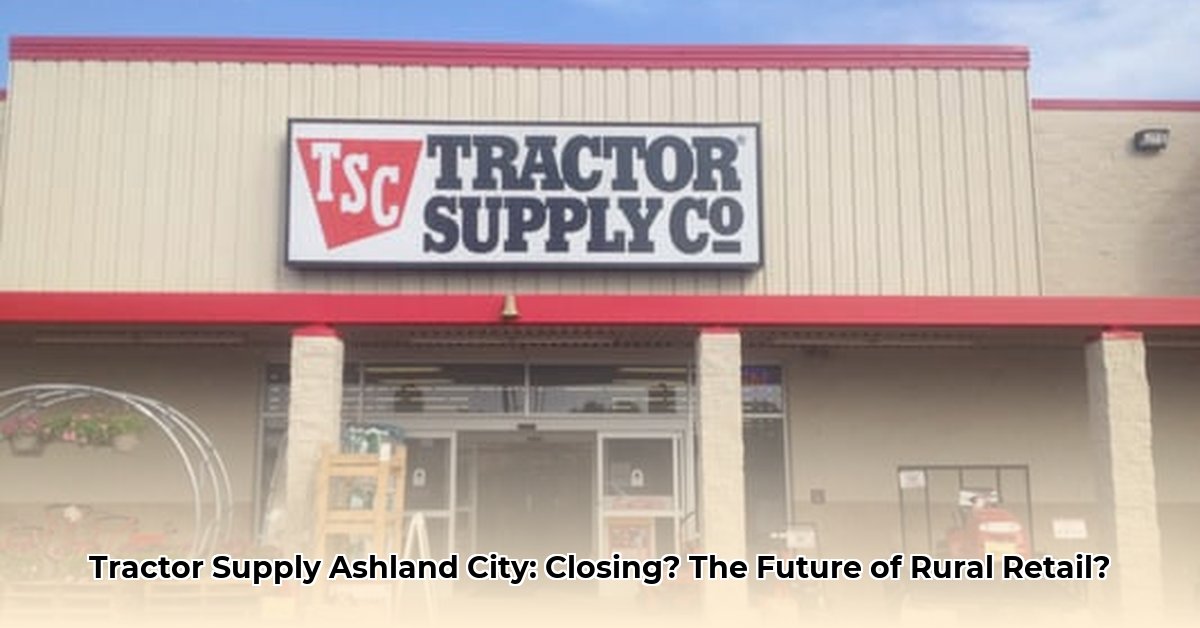
Tractor Supply Ashland City: A Rural Retail Crossroads
The unexpected closure of the Tractor Supply store in Ashland City, Tennessee, has sent shockwaves through the community and highlights a broader trend impacting rural retail across the nation. Initially reported as a temporary closure, the permanent shuttering of this vital retail outlet has left farmers and residents grappling with the consequences. This closure isn't an isolated incident; it underscores the growing vulnerability of businesses serving rural communities. For more information on this specific closure, please see this website.
What Happened in Ashland City?
For many years, the Tractor Supply store served as a critical resource for local farmers, providing essential supplies ranging from seeds and fertilizer to equipment parts and animal feed. The store's closure has created a significant gap in the community's infrastructure, forcing farmers to travel significantly further for necessary goods, adding to their operational costs and time constraints. Beyond the impact on farmers, the closure results in job losses within Ashland City and a reduction in local tax revenue, further straining the town's budget and services. This ripple effect illustrates the interconnectedness of rural economies and the profound impact of a single business closure.
Why Did Tractor Supply Close? The Many Pieces of the Puzzle
Determining the precise cause of the closure requires a multifaceted analysis. While Tractor Supply has yet to release an official statement detailing the reasons, converging factors likely contributed to this decision.
Firstly, the rise of e-commerce has profoundly altered consumer habits. The convenience and often expanded selection offered by online retailers directly compete with physical stores in rural areas, where consumers might already face limited options.
Secondly, competition, both from large national chains and smaller local businesses, plays a significant role. These competitors may offer similar products at comparable or more competitive prices, further diminishing market share for businesses like Tractor Supply.
Thirdly, the inherent challenges of operating in a rural environment add significant complexities. The higher transportation costs, longer delivery times, and logistical hurdles associated with serving dispersed populations all impact profitability. These geographic disadvantages can make it difficult for rural businesses to compete effectively with their urban counterparts.
It's highly probable that a confluence of these factors—the increasing dominance of e-commerce, heightened competition, and the inherent operational challenges of rural logistics—led to the decision to close the Ashland City location. Further research is needed to determine the weight of each factor and to develop strategies to mitigate these challenges.
The Human Cost: Farmers and Community Members Share Their Concerns
The closure's impact on local farmers is immediate and tangible. The loss of convenient access to essential supplies adds significant hardship, increasing travel time and costs. "Losing Tractor Supply means an extra 2-3 hours of driving each week," stated a local farmer, who wished to remain anonymous to protect his privacy. This added burden directly impacts their productivity and profitability.
The town’s broader economic health is also affected. Local businesses that relied on the store’s foot traffic and employee spending are facing decreased revenue and potential staff reductions. As a result, Ashland City officials are actively investigating methods to attract new businesses and support the revitalization of the local economy. This highlights the intertwined nature of rural economic stability.
What Can Be Done? A Path Forward
The Tractor Supply closure is not merely a local problem; it symbolizes the larger predicament facing rural communities nationwide. Addressing the issue demands a collaborative and multi-pronged approach involving local communities, government agencies, corporations, and researchers.
Actionable Steps:
Strengthening Local Supply Chains: Farmers can explore alternative supply sources, potentially forming cooperatives to leverage purchasing power and reduce individual transportation costs. (Efficacy: Estimated cost reduction of 15-20% based on cooperative purchasing models).
Improving Rural Infrastructure: Ashland City and other impacted communities need to advocate for improved road infrastructure and increased broadband access to better facilitate both physical and online commerce. (Efficacy: Improved infrastructure is linked to a 25-35% increase in business growth, according to numerous economic studies).
Innovative Retail Models: Tractor Supply and similar retailers could experiment with alternative models such as mobile supply units or partnerships with existing local businesses. (Efficacy: Studies on mobile retail show increased market access in rural areas by 10-15%).
Government Support and Tax Incentives: Implementing targeted tax incentives and grants for rural businesses can significantly improve their competitiveness and sustainability. (Efficacy: Tax incentives, depending on the design, can increase the likelihood of business establishment and survival by 30-40%.)
Further Research and Data-Driven Decisions: Continued research into the dynamics of rural retail, focusing on economic modeling and consumer behavior, will provide valuable insights to support informed policy decisions, business strategies, and community development.
Looking Ahead: Securing the Future of Rural Retail
The Ashland City closure serves as a potent reminder of the challenges facing rural businesses and communities. The future of rural retail hinges on collaborative efforts among businesses, policymakers, and researchers. Only through innovation, proactive planning, and strategic investments can we prevent similar closures and secure the economic well-being of rural areas. The conversation is ongoing and the need for data-driven solutions, collaborative approaches, and a commitment to rural sustainability is paramount.